How to build a public product roadmap (step by step)
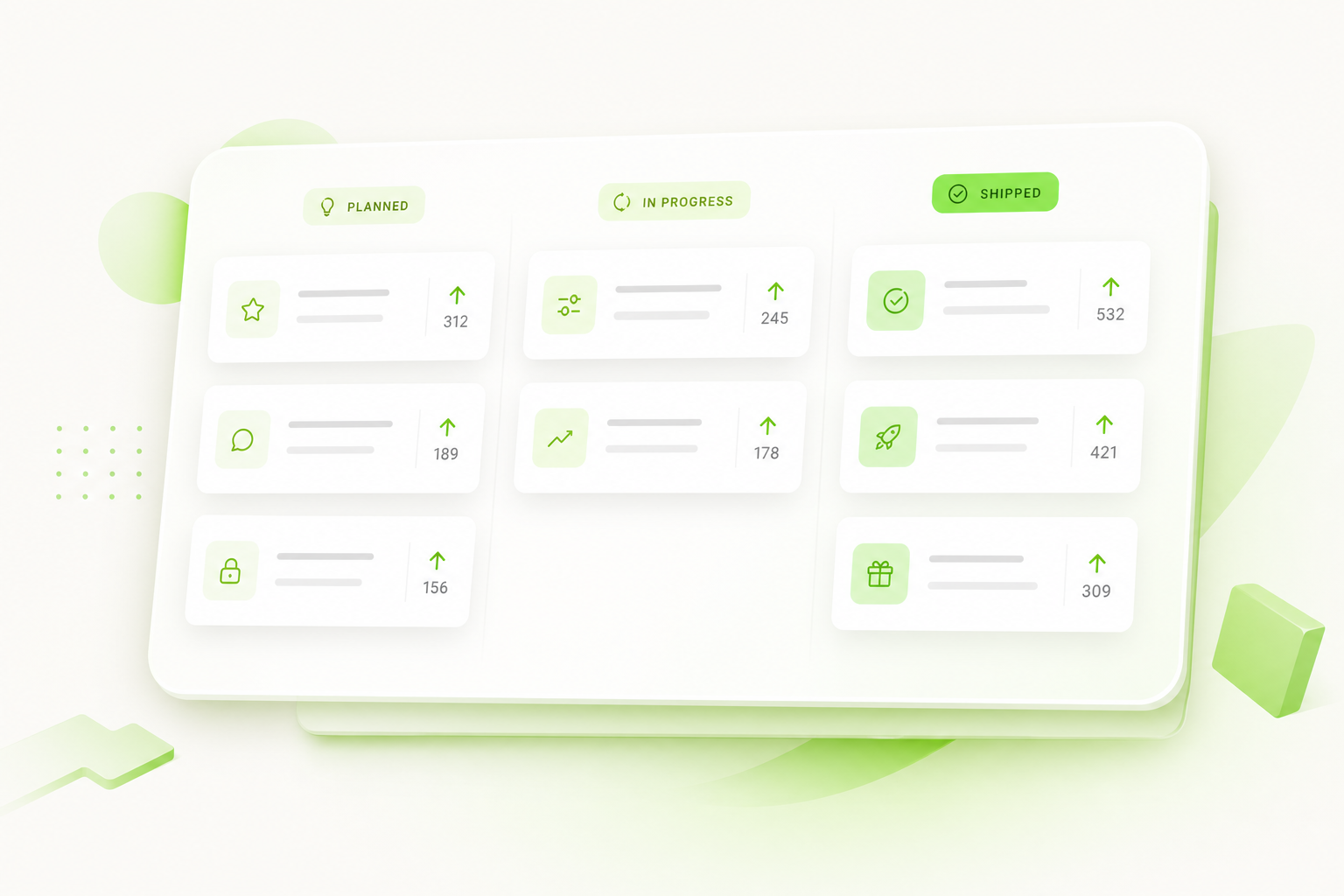
A public roadmap is a web page where your users can see what you are building, vote on ideas, and follow what ships. Done well, it replaces scattered feedback with a single, ranked source of truth. Here is how to set one up in five steps, and the mistakes to avoid.
What a public roadmap is (and why it builds trust)
A public roadmap is a shared, web-based view of your product plans, usually split into a few simple stages such as planned, in progress and shipped. Anyone can read it, submit an idea, and vote on what matters to them.
Why it matters: most teams ship too much that nobody uses. Pendo's analysis of product usage found that 80% of features in the average product are rarely or never used, and the Standish Group's CHAOS research put the figure at 64% (45% never, 19% rarely). A public roadmap attacks the root cause by letting real demand, not guesswork, set your priorities.
Public vs private: which to choose
A private roadmap, shared only with your team, keeps plans confidential but cuts you off from the people who use the product every day. A public roadmap trades a little secrecy for trust, SEO and a steady stream of ranked ideas.
For most small SaaS teams the public option wins: it is indexed by search engines, easy to share, and it signals that you listen. Keep sensitive bets off the board and publish the rest.
Build your public roadmap in five steps
1. Collect. Put a public board on your site or domain and let users submit ideas in seconds, ideally without forcing them to create an account.
2. Vote. Let users vote so the most wanted ideas rise on their own. Frictionless voting, such as a magic link with no password, keeps participation high.
3. Prioritize. Combine the vote counts with your strategy to decide what to build next. The data turns prioritization from a debate into a ranked list.
4. Ship. Move ideas through a few clear stages so everyone can see progress at a glance.
5. Close the loop. Tell voters when their idea ships. Responsive feedback loops can lift retention by 25 to 30%, and 91% of people say companies should innovate by listening to customers (SurveyMonkey).
Common mistakes to avoid
Do not require an account to vote: every extra step cuts participation. Do not promise dates you cannot keep; use stages, not deadlines. Do not let the board go stale, an abandoned roadmap erodes trust faster than no roadmap at all. And do not bury it on a subdomain nobody visits, embed it where your users already are.
If you are moving off another tool, most platforms export to CSV. See our Canny alternative page for a migration example and a feature-by-feature comparison.
FAQ
- Is a public roadmap good for SEO?
- Yes. Because it lives on the open web rather than behind a login, each idea and status page can be indexed by Google, which brings in long-tail search traffic over time.
- Do users need an account to vote?
- They should not. The lowest-friction setups use a magic link: one email, one tap, one vote, with no password or signup. Removing that step is the single biggest lever on participation.
- How many stages should a roadmap have?
- Three is plenty: planned, in progress, and shipped. More stages add admin overhead without making the roadmap any clearer for users.